
 EN
EN

Every business that serves beverages must decide which disposable cup material best suits its operational goals. That choice is far more consequential than it might first appear, because each disposable cup material carries a distinct environmental footprint, cost structure, and functional performance profile. Understanding these differences is the first step toward making smarter procurement decisions that balance budget control with genuine environmental responsibility.
Whether you operate a busy café, a corporate cafeteria, or a large-scale food production facility, the disposable cup material you select shapes your cost per unit, your waste management obligations, and the impression your brand makes on environmentally conscious customers. This article explores exactly how disposable cup material selection influences both sustainability outcomes and cost efficiency, giving you the insight needed to choose with confidence.
The Sustainability Impact of Disposable Cup Material
How Raw Material Origin Determines Environmental Load
The environmental story of any disposable cup material begins at the point of raw material extraction. A disposable cup material derived from virgin wood pulp, for instance, requires logging, processing, and chemical treatment before it reaches cup form. In contrast, a disposable cup material made from recycled fiber reduces pressure on forests and lowers the energy consumed during manufacturing. Understanding the origin of each disposable cup material is therefore essential when evaluating the true sustainability of your packaging supply chain.
Petroleum-based disposable cup material, such as conventional polystyrene or standard plastic-lined paper, introduces long-term pollution concerns. These types of disposable cup material can persist in landfill environments for centuries. Meanwhile, a plant-based disposable cup material, such as PLA-lined paper or bagasse, breaks down far more rapidly under the right composting conditions. Choosing a disposable cup material with a lower environmental load from extraction through disposal is one of the most direct actions a business can take to reduce its packaging footprint.
End-of-Life Scenarios for Each Disposable Cup Material Type
End-of-life behavior is one of the most critical dimensions of disposable cup material evaluation. A disposable cup material that cannot be recycled or composted simply transfers environmental costs onto municipalities and consumers. For example, a traditional paper cup lined with standard PE coating is technically a composite disposable cup material, which makes it difficult to separate and recycle through mainstream facilities. This limitation undermines the eco-friendly appearance that many paper-based products project.
A double-wall PE-coated disposable cup material does offer excellent insulation and structural strength, but its end-of-life pathway requires specialized processing. Businesses that prioritize closed-loop sustainability should consider whether local waste infrastructure can actually handle the disposable cup material they purchase. Selecting a certified compostable disposable cup material, or one accepted by regional recycling programs, ensures that the sustainability claim holds up beyond the point of sale.
Cost Efficiency and Disposable Cup Material Selection
Unit Cost Versus Total Cost of Ownership
When comparing disposable cup material options on price, many buyers focus only on the cost per unit. While that figure matters, a complete cost efficiency analysis must account for the full lifecycle cost tied to each disposable cup material. For instance, a lower-cost disposable cup material that requires double-cupping due to poor insulation effectively doubles your cup consumption and your expenditure. A higher-quality disposable cup material with superior wall insulation may carry a higher unit price but reduce overall usage volume.
Bulk purchasing also interacts with disposable cup material selection in important ways. High-volume buyers can negotiate better rates on a premium disposable cup material when they commit to consistent orders. For foodservice operators managing tight margins, the disposable cup material decision affects not just product cost but also labor time, waste disposal fees, and customer satisfaction. A disposable cup material that leaks, deforms under heat, or transfers temperature to the hand creates service disruptions that carry their own hidden costs.
How Compliance Costs Relate to Disposable Cup Material
Regulatory trends in many markets are directly affecting the cost calculus of disposable cup material procurement. Extended producer responsibility schemes, single-use plastics bans, and packaging levies are reshaping which disposable cup material options remain commercially viable. A business that locks into a non-compliant disposable cup material today may face costly supply chain pivots within a short window as new regulations take effect.
Investing in a certified eco-friendly disposable cup material now can therefore represent a cost-avoidance strategy rather than a premium expense. When a disposable cup material already meets or exceeds upcoming regulatory standards, businesses avoid the disruption of emergency reformulation and supplier switching. The apparent premium of a sustainable disposable cup material today becomes a hedge against compliance cost tomorrow.
Matching Disposable Cup Material to Business Application
Performance Requirements Across Different Use Cases
Not every disposable cup material performs equally across all beverage service contexts. A hot-beverage application demands a disposable cup material with reliable thermal insulation, structural rigidity under heat, and a secure lid-fit. Cold beverage service introduces condensation management as a priority, meaning the outer surface of the disposable cup material must resist moisture without becoming slippery. Matching the disposable cup material to the specific beverage type and service environment is essential for both customer experience and operational efficiency.
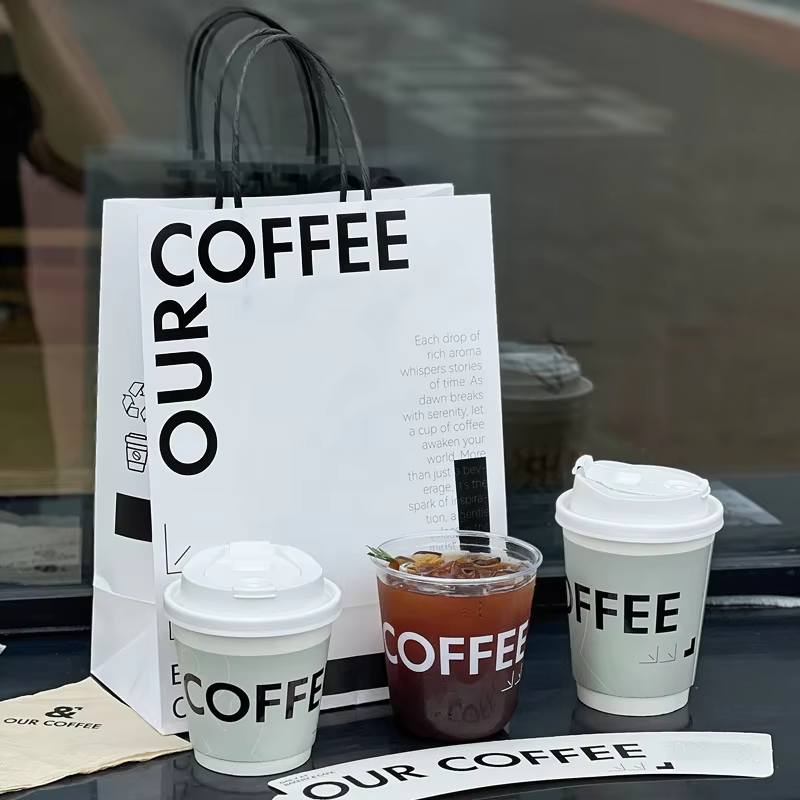
A double-wall disposable cup material, for example, excels in hot coffee and tea service because the air gap between walls provides insulation without requiring a cardboard sleeve. This design reduces material consumption per serving while maintaining comfort. For take-away operations with high throughput, selecting the right disposable cup material from the outset eliminates service slowdowns caused by cup failures, lid incompatibility, or customer complaints about heat transfer.
Customization and Brand Value in Disposable Cup Material
The print surface quality of a disposable cup material also influences brand perception and marketing value. A smooth, consistent disposable cup material surface accepts high-resolution custom printing far better than rough or recycled-fiber alternatives. For brands that invest in cup design as a customer touchpoint, choosing a disposable cup material that supports sharp, vibrant graphics adds measurable marketing return to the procurement decision. This brand value dimension makes disposable cup material selection a strategic choice, not merely a logistics decision.
FAQ
What disposable cup material is best for hot beverages?
A double-wall PE-coated paper disposable cup material is widely preferred for hot beverages because it provides strong insulation, structural integrity under heat, and comfortable handling without an additional sleeve. This disposable cup material type suits café and take-away operations well.
Is a biodegradable disposable cup material more expensive?
A certified biodegradable disposable cup material typically carries a slightly higher unit cost than conventional alternatives, but this gap narrows with volume purchasing. When compliance costs and waste disposal fees are included in the calculation, a sustainable disposable cup material often delivers competitive total cost of ownership.
How does disposable cup material affect recycling outcomes?
The composition of a disposable cup material directly determines whether it can enter standard recycling streams. A composite disposable cup material with mixed plastic and paper layers requires specialized separation, while a single-material disposable cup material or a certified compostable option aligns better with mainstream waste processing infrastructure.