- Home
- About Us
- Products
- Case
- News
- Blog
- Solution
- Contact Us

The right sustainable food packaging is not selected by material name alone. Foodservice and takeaway brands should evaluate five connected factors: food-contact suitability, barrier performance, structure, end-of-life instructions and supply-chain fit. A paper cup, paper bowl, food container or bakery box should be matched to the food, temperature, delivery time, storage conditions and target-market requirements before a material or finish is approved.
For brands sourcing custom food packaging, the most practical process is to define the application first, compare materials and structures second, confirm compliance documentation third, and validate the finished sample before mass production.
Sustainability is changing how food and beverage brands evaluate packaging. Current industry discussions increasingly connect lightweighting, recyclable or compostable material options, packaging waste reduction, smart packaging and regulatory readiness. DHL's 2026 packaging outlook highlights lightweight design, circular solutions, smart packaging and changing regulations as key areas for businesses to monitor. Packaging technology specialists are also developing paper-based and mono-material solutions for applications that require barrier performance and reliable sealing.
The practical implication for a restaurant, coffee shop, bakery or food brand is clear: “eco-friendly” is not a complete specification. A package still needs to protect food, perform during handling and delivery, communicate the brand and meet the requirements of the destination market.
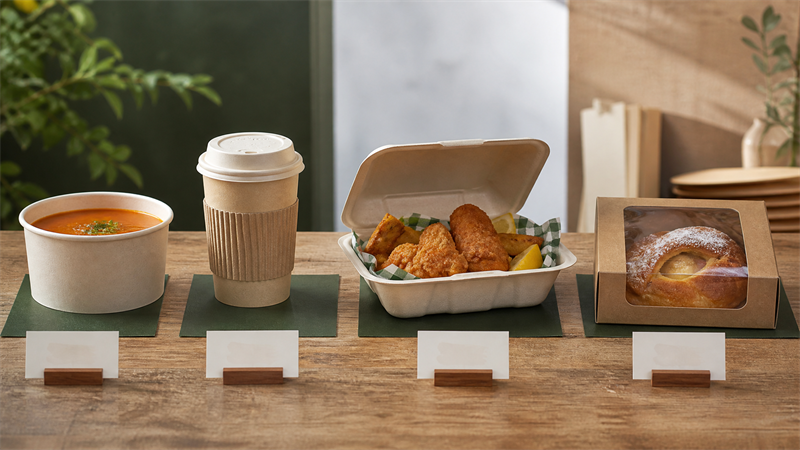
The packaging requirement is determined by the product inside it. A hot soup, fried chicken meal, iced coffee, pastry or chilled dessert creates different demands for oil resistance, moisture control, heat insulation, leak prevention, stiffness, visibility and temperature tolerance.
Before contacting a food packaging supplier, prepare the following information:
This information helps the supplier recommend a fit-for-purpose package rather than simply offering the most popular material.
A sustainable food packaging decision should compare the whole package system, not just the visible substrate.
Paper-based packaging can support a familiar natural appearance and is widely used for paper cups, paper bowls, food containers, burger boxes and bakery boxes. However, the barrier layer, coating, lid and disposal route also affect the package's real-world performance and recyclability.
Compostable packaging may be suitable for selected applications, but “compostable” does not mean that every package will break down in every environment. The intended industrial or commercial composting route, local collection system and applicable certification requirements should be confirmed for the specific product and market.
Mono-material packaging can simplify material composition and may support recycling objectives where the relevant collection and recycling infrastructure exists. Its performance still depends on the required oxygen, moisture, grease and seal barriers.
For this reason, buyers should ask for product-specific material information and documentation instead of relying on broad claims such as “green,” “plastic-free” or “biodegradable.”
A package that leaks, collapses or allows food quality to deteriorate can create product waste and customer complaints. Sustainable design therefore includes functional protection.
For takeaway food, useful design questions include:
Sellmore Pack develops custom structures for applications such as leak-resistant paper bowls, soup-and-noodle separation bowls, heat-insulated paper cups, oil-resistant fast-food containers and window bakery boxes. The final structure, material and finish should be selected against the buyer's actual food and delivery conditions.
Food-contact packaging requirements vary by destination market, material, product category and intended use. A buyer may need testing reports, declarations, certification records or export documentation, but the required evidence should be confirmed for the specific product and jurisdiction.
Sellmore Pack's company materials describe support for customers targeting Europe and North America, including product testing, export compliance documentation and market-specific certification coordination. This support should be handled as a project requirement—not as a blanket claim that every product automatically meets every regulation.
A responsible sourcing checklist should include:
1. Identify the destination country or region.
2. Define the food type, temperature and contact conditions.
3. Confirm the material and coating composition.
4. Request the relevant product-specific test reports or declarations.
5. Review artwork, inks, adhesives and accessories as part of the package system.
6. Approve a physical sample before placing the production order.
7. Keep the documentation with the product specification and purchase records.
A packaging supplier should be evaluated not only on the first quotation, but also on design communication, proofing, quality control, production continuity, logistics coordination and after-sales support.
For small and growing brands, low-MOQ custom food packaging can reduce the risk of testing a new visual identity or menu concept. For chains and multi-location operators, stable production capacity and consistent artwork control are more important because packaging must look and perform consistently across repeated orders.
According to Sellmore Pack's company information, the business is backed by more than 20 years of food packaging manufacturing experience, a 47,000-square-metre parent-factory site, more than 120 standardized production lines and a design and R&D team of more than 60 people. The company also states that regular products can receive proofing within 72 hours, subject to product structure and process requirements. Buyers should confirm the exact sample schedule, MOQ, production lead time and shipping plan for each project.
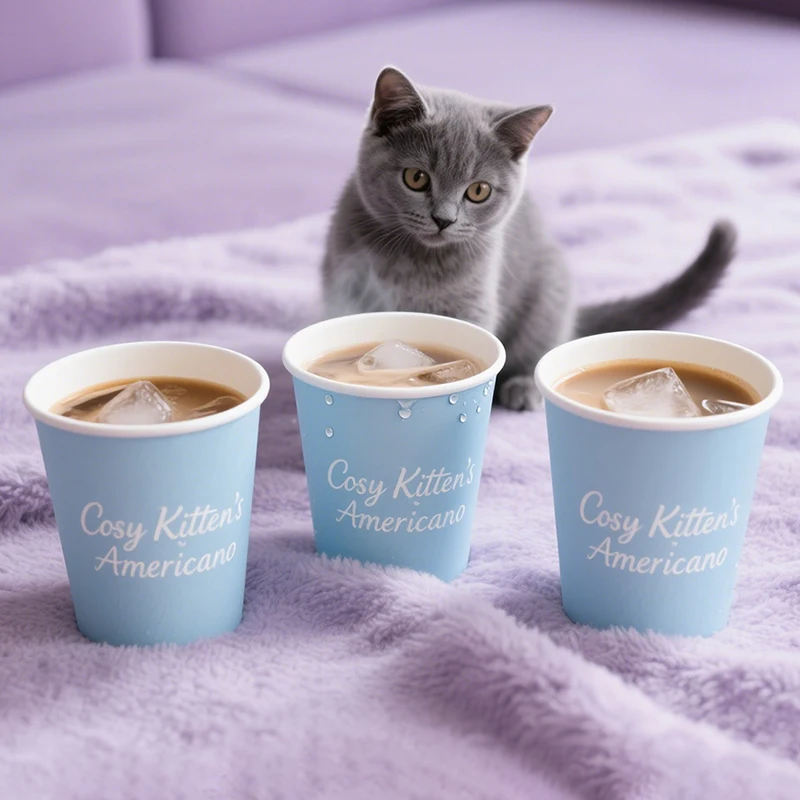
Custom paper cups help coffee shops, tea brands, juice bars and drive-through beverage operators keep brand visuals consistent across dine-in, takeaway and delivery. Buyers can evaluate single-wall, double-wall, corrugated and other cup structures according to drink temperature, hand comfort, lid compatibility and delivery use.
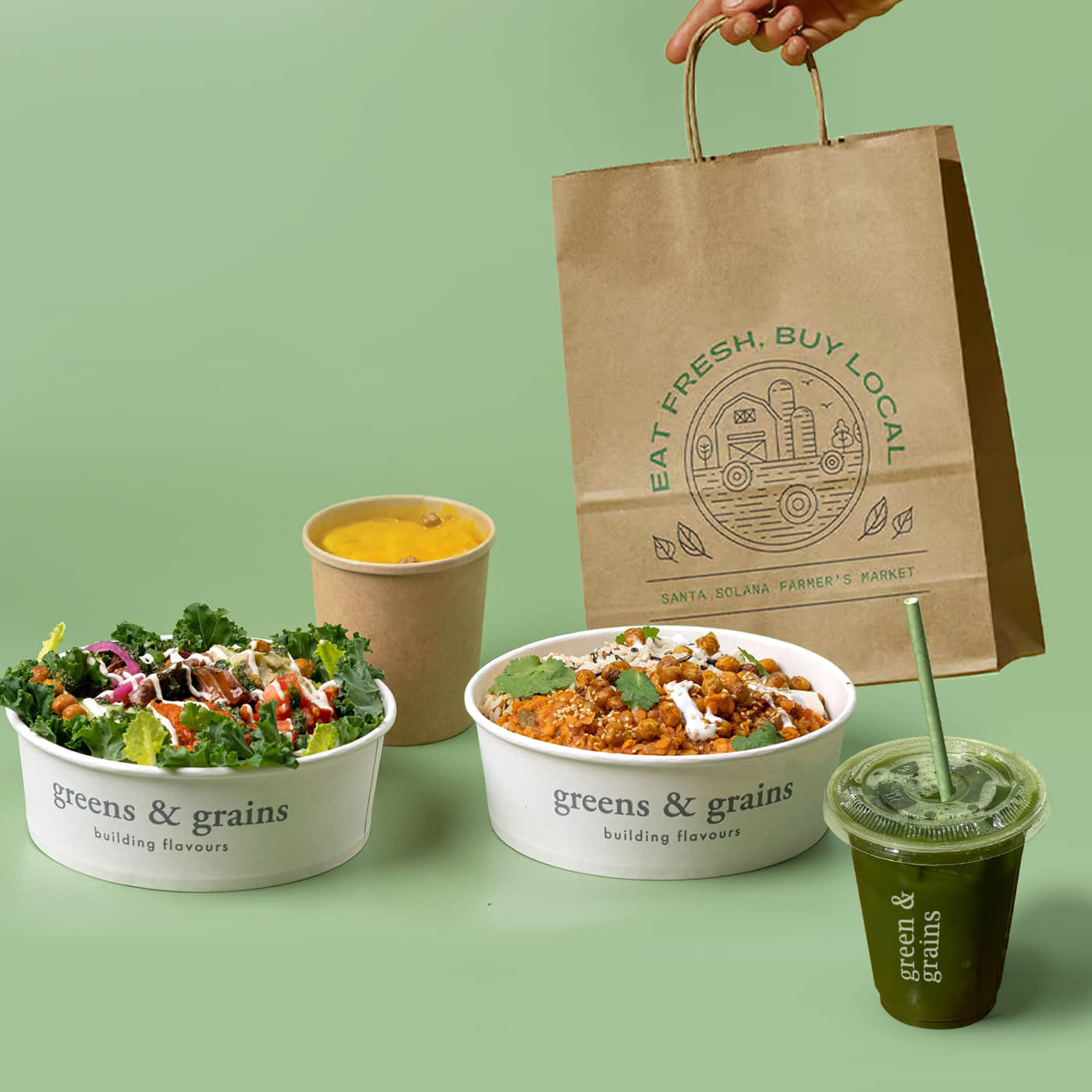
Paper bowls can be developed for different serving sizes and food types, including soups, noodles, snacks and sharing portions. The key decision points are bowl stiffness, leak resistance, oil resistance, lid fit, thermal performance and compatibility with the brand's delivery workflow.
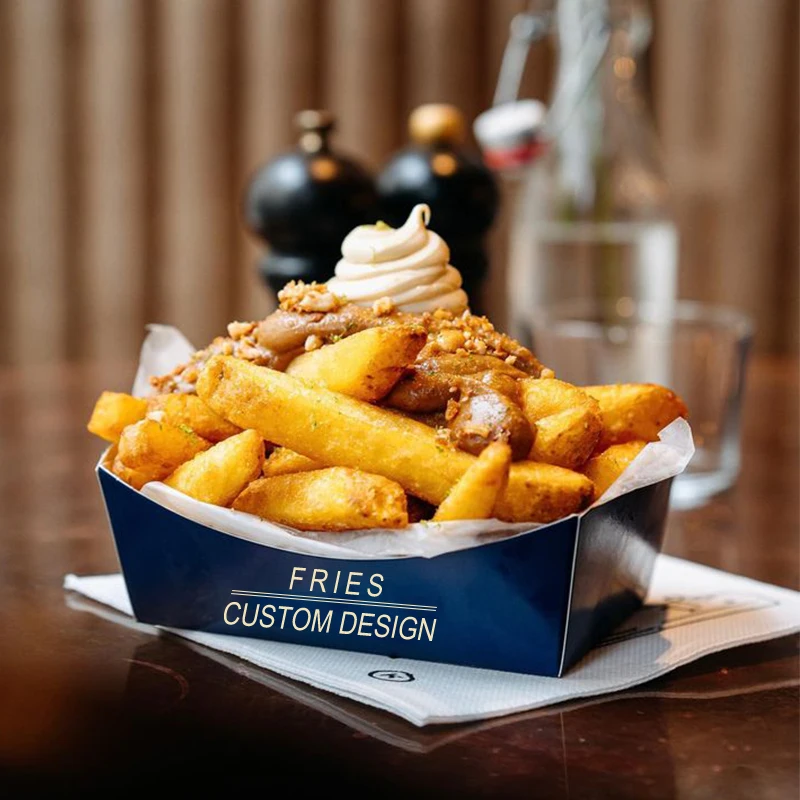
Burger boxes, fried chicken boxes, fry cartons, pizza boxes and snack containers should protect food during stacking and transport while supporting fast service. A custom structure can also help a brand create a consistent visual system across containers, cups, bags, sauce packaging and printed accessories.
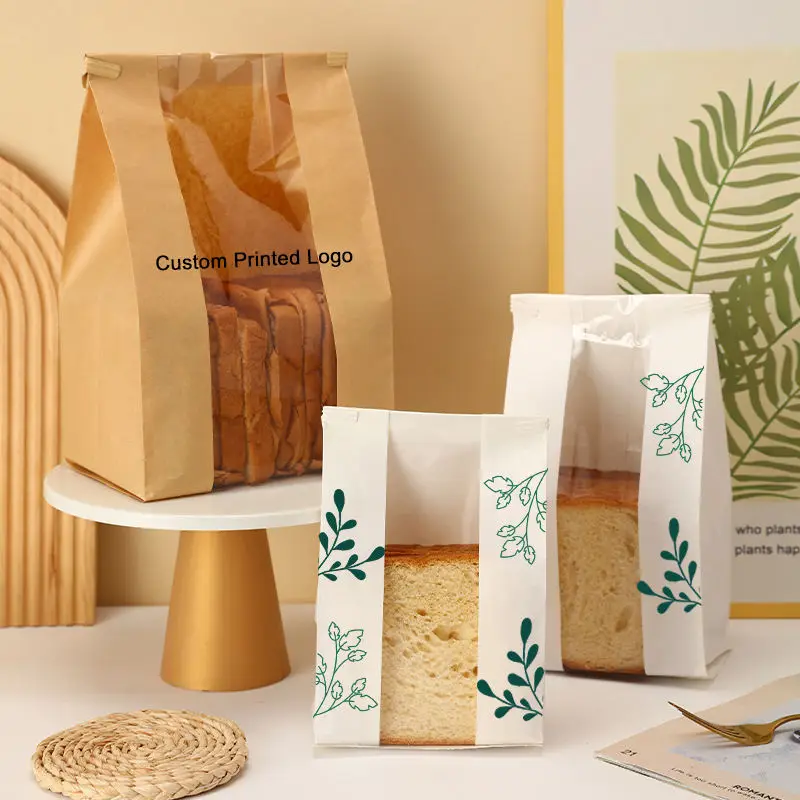
Bread boxes, cake boxes, dessert boxes, cookie boxes and window bakery packaging need to balance presentation with moisture control, product protection and transport requirements. Seasonal and gift packaging can extend the same visual identity into Christmas, Easter, Valentine's Day and corporate gifting programs.
A reliable custom food packaging project can follow this sequence:
Application brief:
1. define food, size, temperature, use scenario and market.
Material and structure review:
2. compare options by barrier performance, appearance, disposal route and cost.
Artwork and technical review:
3. confirm dimensions, printing method, accessories and packaging assembly.
Compliance review:
4. identify required testing and export documents for the target market.
Physical proofing:
5. inspect fit, sealing, leakage resistance, print quality and handling performance.
Pilot order:
6. validate the package in real service or delivery conditions.
Production and replenishment plan:
7. confirm quality checkpoints, lead time, shipping and repeat-order controls.
This process helps prevent a common purchasing mistake: approving a visually attractive package before testing its performance in the actual foodservice environment.
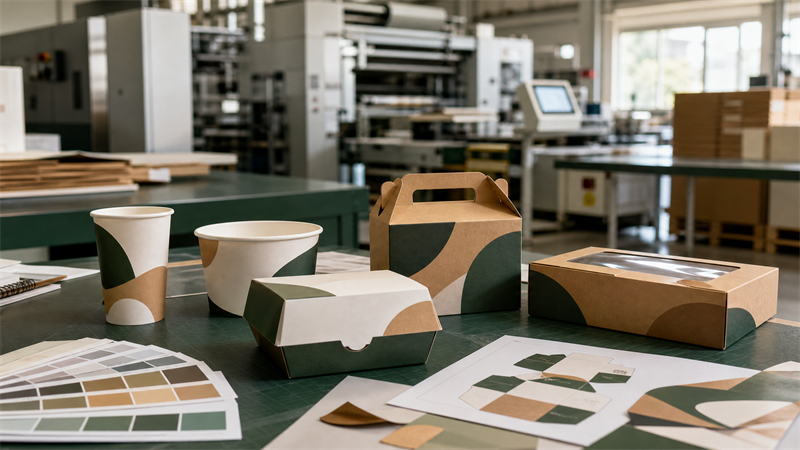
Sellmore Pack is the custom food packaging business of Dalian Sellmore Trading Co., Ltd., backed by Dalian Huiyou Packaging. Its company materials describe an integrated service covering design, material selection, structure development, compliance coordination, production and global delivery.
The company's core product lines include:
The team also supports matching items such as lids, cup sleeves, bags, sauce cups, cutlery sets, tray liners and other branded foodservice accessories. This full-set approach can help buyers reduce fragmented sourcing and maintain a consistent packaging identity across the customer experience.
For a project-specific recommendation, buyers should share the food application, package dimensions, target market, expected order quantity and required delivery plan. Sellmore Pack can then assess suitable materials, structures, artwork and documentation requirements for the project.
There is no single best material for every food application. The right choice depends on food type, temperature, barrier needs, structure, local disposal infrastructure, target-market rules and the required documentation.
Not automatically. Compostable packaging can be appropriate where the product, certification, collection route and local composting infrastructure align. Buyers should verify the specific claim and disposal instructions for the target market.
Ask about material composition, food-contact documentation, barrier performance, structure options, printing and finishing, MOQ, proofing time, production lead time, quality control, logistics and after-sales support.
Sellmore Pack's company materials state that it supports flexible order quantities, including low-MOQ custom projects for independent stores and start-up brands, as well as larger production orders. The exact MOQ depends on the product category, material, printing method and structure.
Sellmore Pack states that regular products can be proofed within 72 hours, while complex structures and processes may require longer. The confirmed schedule should be agreed after the technical brief is reviewed.
Sustainable food packaging is a performance and sourcing decision, not a label. The strongest package solutions balance food protection, delivery reliability, brand presentation, material responsibility, market-specific documentation and supply-chain practicality.
For foodservice brands planning a new launch, packaging refresh or multi-category procurement program in 2026, the next step is to prepare a complete application brief and test the proposed package in real operating conditions.
Talk to Sellmore Pack about your custom food packaging project.
 Hot News
2026-08-26
2026-08-06
2026-07-30
2026-07-10
2026-07-02
2026-06-17
 EN
EN