
 EN
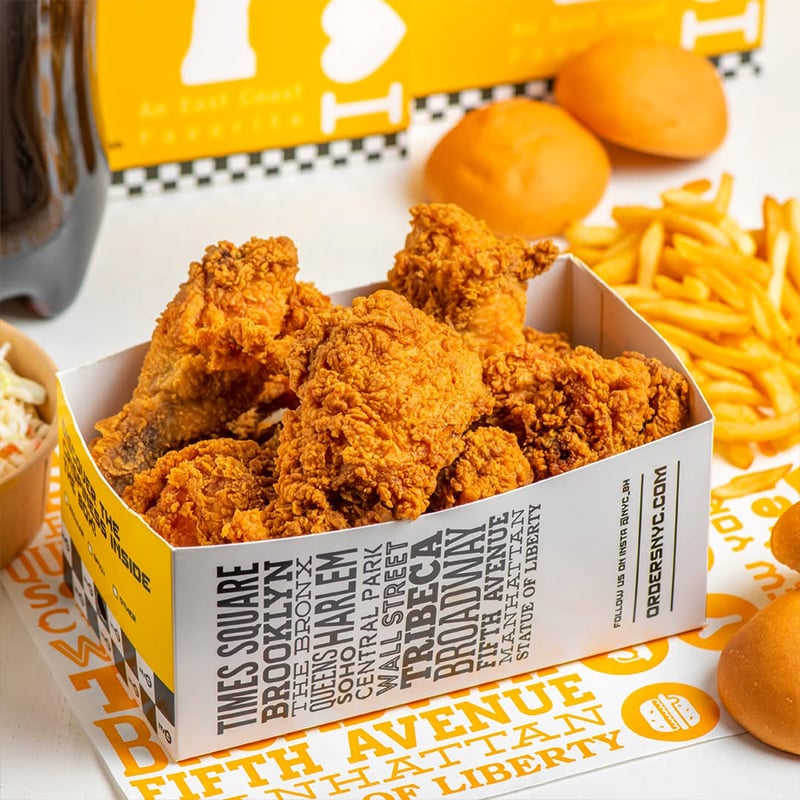
The performance of a fried chicken box in high-temperature conditions represents a critical operational concern for quick-service restaurants, catering operations, and food delivery services. When fried chicken maintains its heat during transport or storage, the packaging must endure sustained thermal stress while protecting product quality and maintaining structural integrity. Understanding how a fried chicken box performs under these demanding conditions helps food service operators select appropriate packaging solutions and manage food safety compliance effectively.

A fried chicken box designed for high-temperature performance must balance multiple functional requirements. The packaging must retain structural rigidity to prevent collapse under its own weight and product load, resist oil and grease penetration from the fried chicken itself, and maintain barrier properties against moisture loss and external contamination. The fried chicken box also influences customer perception through appearance retention and brand representation, making performance under thermal stress directly tied to business outcomes and customer satisfaction metrics.
Material Composition and Thermal Resistance
Paper Board Grade and Coating Technology
A high-performance fried chicken box relies on premium paperboard construction combined with specialized coating systems. The base material typically uses bleached kraft paper or food-grade paperboard rated for direct food contact, providing structural support and barrier foundation. PE coating applications on the interior surfaces of a fried chicken box create moisture barriers that prevent oil penetration and condensation absorption when the packaging holds hot fried chicken. This dual-layer approach allows a fried chicken box to maintain rigidity and appearance even as internal temperatures remain elevated for extended periods.
The thickness and density of paperboard significantly affect how a fried chicken box responds to thermal stress. Heavier gauge boards resist warping and deformation better than thin alternatives when exposed to sustained heat. When a fried chicken box contains freshly fried chicken at temperatures between 150–180°F, the interior surfaces experience direct heat transfer that can soften standard coatings or cause paper fiber relaxation. Manufacturers address this challenge by selecting PE coatings with elevated melting points and using calendar-pressed paperboard that resists fiber expansion under moisture and heat exposure.
Barrier Properties Under Heat Stress
The barrier function of a fried chicken box becomes particularly important in high-temperature conditions because heat accelerates moisture migration and grease penetration rates. When a fried chicken box holds hot product, water vapor pressure increases inside the container, driving moisture toward the paperboard structure and coating interfaces. A fried chicken box with inadequate PE coating thickness may allow moisture to reach the paper fibers, causing swelling, softening, and loss of structural rigidity. Commercial-grade fried chicken box designs typically incorporate PE coating layers between 15–25 microns thick, providing sufficient barrier strength for hot-hold applications lasting two to four hours.
Grease resistance becomes equally critical because fried chicken releases oils that dissolve into paper fiber if barriers fail. A fried chicken box exposed to hot grease shows accelerated permeation compared to cold product scenarios due to reduced viscosity and increased molecular activity at higher temperatures. The PE coating in a quality fried chicken box creates a hydrophobic barrier that repels both water-based condensation and oil-based grease, maintaining structural integrity and preventing product leakage or staining of external surfaces.
Structural Integrity and Dimensional Stability
Box Rigidity and Collapse Resistance
A fried chicken box must maintain consistent dimensions and structural strength when exposed to internal heat and moisture. High-temperature conditions weaken the adhesive bonds between paperboard plies and can cause dimensional changes that compromise the box's ability to close securely or stack properly. When a fried chicken box contains hot fried chicken, the elevated temperature and humidity inside create conditions that soften paperboard and reduce compressive strength. Engineered fried chicken box designs include reinforced corner construction, optimized flute direction in corrugated variants, and adhesive systems rated for thermal stability to resist these degradation mechanisms.
The sidewall thickness and crease design of a fried chicken box directly influence how well it resists collapse under thermal and product weight stress. A fried chicken box constructed with proper crease geometry allows the paperboard to fold cleanly without excessive fiber disruption, maintaining load-bearing capacity. When a fried chicken box experiences sustained heat exposure, the paper fibers lose moisture temporarily, then reabsorb humidity as the box cools, potentially causing permanent dimensional changes if the paperboard lacks sufficient bulk or if adhesives fail to reactivate properly.
Lid Seal Performance and Closure Integrity
The lid of a fried chicken box functions as both a structural component and a seal against external contamination. When a fried chicken box is filled with hot product and sealed, the interior pressure from steam generation and heat expansion stresses the lid attachment and crease mechanism. High-temperature conditions can soften the PE coating on the lid flaps, making them stick together prematurely or preventing proper resealing if the fried chicken box is opened and reclosed. Commercial fried chicken box designs incorporate specialized lid geometry and coating formulations that maintain flexibility and adhesion properties across the temperature range from hot-fill conditions down to room temperature storage.
The seal integrity of a fried chicken box deteriorates faster in high-temperature scenarios because adhesives and coating materials approach their glass transition temperatures. A fried chicken box lid that performs adequately at room temperature may show premature edge curling or separation when exposed to sustained heat from hot fried chicken. Manufacturers address this challenge by selecting adhesive systems with high thermal stability and incorporating mechanical interlock features in the lid flap design that provide structural security independent of adhesive strength alone.
Performance Under Thermal Cycling and Storage Scenarios
Thermal Cycling Effects on Packaging Durability
A fried chicken box often experiences significant thermal cycling during typical commercial use. The packaging may transition from hot-fill conditions when fresh fried chicken enters the box, then move to ambient or refrigerated storage conditions, then potentially experience reheating during transport or customer use. Each thermal cycle subjects a fried chicken box to expansion and contraction stresses that can propagate cracks in coatings, cause adhesive failure at seams, and lead to dimensional instability. The PE coating of a fried chicken box contracts more rapidly than the underlying paperboard as temperatures drop, creating internal stress at the interface that can eventually cause delamination if thermal cycling occurs repeatedly.
The cumulative effect of thermal cycling on a fried chicken box becomes apparent after multiple use cycles. A fried chicken box that maintains excellent performance for a single hot-hold cycle may show coating cracks, seam separation, or dimensional warping after three or four thermal cycles. This degradation pattern is particularly important for catering operations and food delivery services that may store fried chicken boxes under varied temperature conditions. Selecting a fried chicken box designed specifically for multi-cycle thermal exposure requires attention to adhesive formulations, coating flexibility, and paperboard conditioning treatments that improve dimensional recovery.
Comparative Performance Across Temperature Ranges
The performance envelope of a fried chicken box extends across a wide temperature range typical of food service operations. At product temperatures between 150–165°F, a well-designed fried chicken box maintains structural rigidity and barrier function for two to three hours without significant degradation. As product temperature approaches 180°F or higher, the performance window narrows because paperboard and coating materials approach their thermal limit. A fried chicken box designed for conventional fried chicken holding may not perform adequately if used for significantly hotter products such as fresh-fried items at temperatures approaching 190°F.
In ambient temperature scenarios between 70–75°F, a fried chicken box performs optimally with minimal thermal stress. The PE coating maintains rigidity, adhesives remain stable, and structural integrity requires no special consideration. The critical performance zone for a fried chicken box occurs between 100–150°F, where thermal energy begins to affect coating flexibility and moisture migration becomes noticeable. Understanding this performance envelope helps food service operators select appropriate fried chicken box specifications for their specific holding time and temperature requirements, ensuring product protection and customer satisfaction.
FAQ
What causes a fried chicken box to fail in high-temperature conditions?
A fried chicken box typically fails due to coating breakdown, adhesive degradation, or excessive moisture absorption when exposed to prolonged high temperatures. PE coatings soften above their glass transition temperature, allowing grease penetration and loss of structural support. Additionally, water vapor inside the fried chicken box creates pressure that stresses seams and can cause lid separation if the adhesive system lacks thermal stability. Poor initial construction, inadequate coating thickness, or inferior paperboard quality accelerates failure rates in high-temperature scenarios.
How long can a fried chicken box maintain performance with hot products inside?
A premium fried chicken box maintains adequate performance for two to four hours when holding product at typical serving temperatures between 150–165°F. The specific duration depends on initial coating quality, ambient conditions, and whether the fried chicken box undergoes thermal cycling. A fried chicken box with robust PE coating and reinforced construction may extend this window to five hours in controlled conditions. Standard packaging may degrade noticeably after two hours of continuous high-temperature exposure, making product quality monitoring essential for extended holding scenarios.
Can a fried chicken box be reused after high-temperature exposure?
Reusing a fried chicken box after high-temperature exposure is generally not recommended for food safety and hygiene purposes, as most designs are manufactured for single-use applications. Additionally, a fried chicken box exposed to high heat may have compromised coating integrity, weakened adhesives, or permanent dimensional changes that reduce its protective capability in subsequent uses. Although a fried chicken box may appear structurally intact after initial use, the material degradation from thermal stress makes it unsuitable for repeated hot-product containment. Operators should follow food safety guidelines and manufacturer recommendations regarding packaging reuse and disposal.